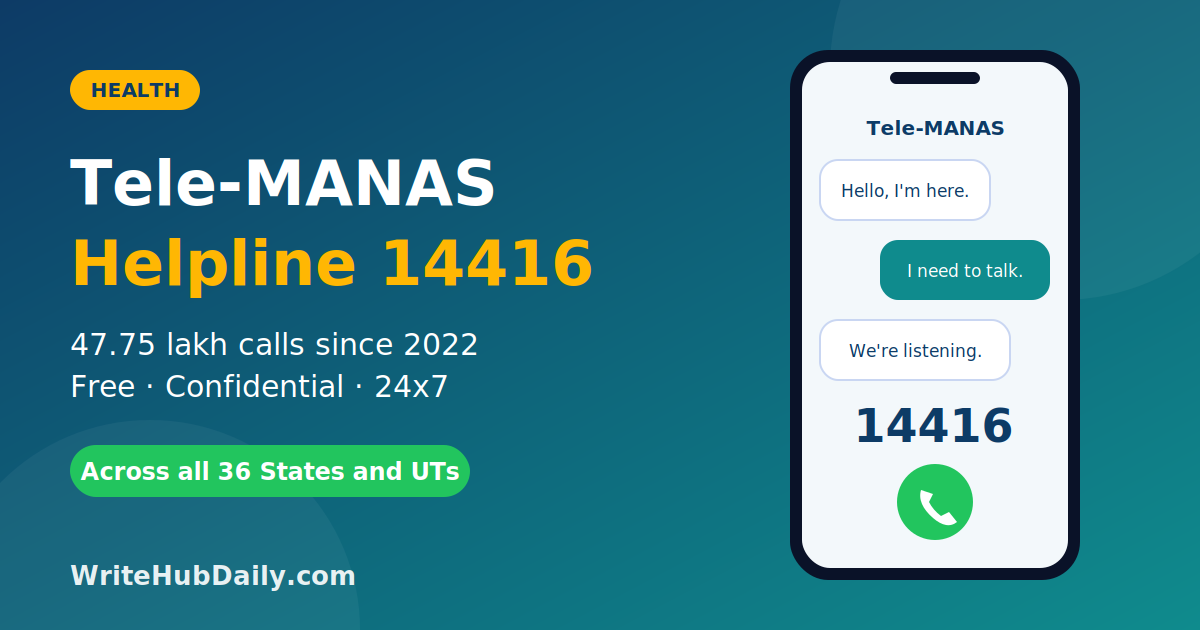
The Tele-MANAS helpline (14416) is India's free, 24x7 mental health helpline, and its numbers have grown fast. Around World Mental Health Day on October 10, 2026, the Union Health Ministry said the service had received 47,75,644 calls since its launch, with 53 operational cells across all 36 States and Union Territories (figures as of October 2026).
Behind that number is a bigger question: how many people in India who need mental health support are actually getting it? This article explains how Tele-MANAS works, what the data says about the treatment gap, and what still needs to improve.
If you or someone you know needs support right now
- Tele-MANAS: call 14416 or 1800-89-14416 (free, 24x7)
- KIRAN helpline: 1800-599-0019
- Emergency: call 112 or go to the nearest hospital
What Is Tele-MANAS?
Tele-MANAS stands for Tele Mental Health Assistance and Networking Across States. It is the main service of the National Tele Mental Health Programme, which was launched on World Mental Health Day, October 10, 2022. Callers speak to trained counsellors, and calls can be linked to further support and referrals where needed. The service is available in multiple Indian languages. A Tele-MANAS app and a video call facility were also launched at the two-year mark, in October 2024.
The Health Ministry describes it as confidential, and says it is meant to help people who hesitate to seek help to reach out early. Individuals, families and caregivers can all use it.
Tele-MANAS at a Glance
| Item | Details |
|---|---|
| Launched | October 10, 2022 |
| Calls received (as of October 2026) | 47,75,644 |
| Operational cells | 53, across all 36 States and UTs |
| Helpline numbers | 14416 or 1800-89-14416 |
| Availability | 24x7, toll-free |
| World Mental Health Day 2026 theme (WHO) | Lived experiences heard: real voices, real change |
Who Is Calling and Why?
At the two-year mark, a Health Ministry assessment found that most callers were aged 18 to 45, and that disturbed sleep and low mood were among the most common concerns. Callers were more often men than women. These patterns suggest that working-age adults are a large share of the people reaching out, though the service is open to everyone.
India's Treatment Gap: Why a Helpline Matters
The National Mental Health Survey 2015-16 found that about 10.6% of adults in India had a mental disorder, and that the share of people not receiving treatment ranged from 70% to 92% depending on the condition. Current affairs summaries commonly cite an overall treatment gap of around 83%, and about 85% for depression.
Several reasons explain the gap:
- Too few specialists: India has fewer than one psychiatrist per 100,000 people, far below the benchmark suggested by the World Health Organization, as cited in recent current affairs digests.
- Stigma: many people delay seeking help because they fear judgement.
- Distance: rural and remote areas have fewer services.
A phone line does not solve these problems on its own, but it lowers the first barrier: a person only needs a phone and a few minutes to speak to someone.
Beyond the Helpline
The Health Ministry says mental health services are also being built into regular primary care. Through more than 1.83 lakh Ayushman Arogya Mandirs, primary healthcare teams screen for mental health concerns, provide psychosocial support and follow-up care, and refer people to higher facilities when needed. The National Mental Health Programme and the District Mental Health Programme continue alongside this.
For World Mental Health Day 2026, the Ministry is also taking forward MANN Jaagriti, a community awareness initiative meant to improve mental health literacy, reduce stigma and encourage people to seek help earlier through schools, colleges, workplaces and health facilities.
What Still Needs to Improve
Health experts note that call numbers are not the same as better outcomes. Key challenges include:
- Continuity of care: helping callers move from a first conversation to ongoing treatment when they need it.
- Counsellor workload: rapid growth in call volume can put pressure on frontline counsellors, who need training, supervision and support.
- Measuring results: tracking whether people actually feel better over time, not just how many calls are answered.
- Equal access: making sure people in remote areas and different language groups can reach the service easily.
How to Support Someone You Are Worried About
- Listen without judging, and let them talk at their own pace.
- Avoid dismissing what they feel with comments like "just relax" or "it's nothing".
- Encourage them to speak to a counsellor, doctor or mental health professional, and offer to help them make the call.
- Share the Tele-MANAS number, 14416.
- If you think someone is in immediate danger, call 112 or take them to the nearest hospital.
For related reading on everyday wellbeing, see our guides on how to improve your sleep routine, creating a healthy daily routine and India's ageing population in 2026. These can support good habits, but they are not a substitute for professional help when you need it.
Frequently Asked Questions
What is the Tele-MANAS helpline number?
You can call 14416 or 1800-89-14416. The service is free and available 24x7.
Is Tele-MANAS free and confidential?
Yes. The Health Ministry describes it as a free and confidential service.
Who can call Tele-MANAS?
Anyone can call, including individuals who are struggling, and families and caregivers who want guidance.
Does Tele-MANAS replace a doctor or therapist?
No. It offers first-line counselling, support and referrals. Many people will still need ongoing care from a mental health professional.
Conclusion
Nearly 48 lakh calls in four years show that many people in India want a safe, easy way to talk about their mental health. Tele-MANAS has made the first step easier, but the larger task is making sure that first call leads to continued, accessible care. If you are struggling, reaching out to a helpline, a doctor or someone you trust is a good place to start.
Disclaimer: This article is for general information only and is not medical advice. If you are experiencing distress or a mental health concern, please speak to a qualified professional. For official details, visit the Tele-MANAS website or the Ministry of Health and Family Welfare. Figures are based on government and media reports published in October 2026.